The Envelope: How Iron Gray Earns Its Place on a Triangle Home
James Hardie’s 2026 Color of the Year isn’t a trend. It’s a design conviction, and the Triangle’s architectural landscape is exactly where it belongs.
Announced by James Hardie on November 10, 2025, Iron Gray is the company’s 2026 Color of the Year, drawn from its Statement Collection® and finished with ColorPlus® Technology. For homeowners in Raleigh, Cary, Apex, and Holly Springs who have been circling a major exterior renovation, waiting for the confidence that comes from a clear design direction, this is a strong signal from the industry’s most trusted name in fiber cement. And for Odyssey Contracting, as a James Hardie Preferred Contractor, this is the year to help Triangle homeowners wear it well.
This is Chapter 02 of the Ultimate Home Makeover, 2026 Edition. Black-framed windows give a home its soul; Iron Gray gives it its envelope.
What “Color of the Year” Actually Means
Color of the Year designations are easy to dismiss as marketing theater. The James Hardie version is backed by co-op marketing investment, contractor training, and design-tool development. It signals the aesthetic Hardie is betting professionals and homeowners most want to see on fiber cement in the coming year. Iron Gray earned that designation because it threads a real needle. As Samara Toole, Chief Marketing Officer at James Hardie, put it:
“Color has the power to amplify a home’s architectural voice. With Iron Gray, we wanted a color that is expressive yet grounded, one that complements strong lines and invites highlight trims to pop. It’s exactly the kind of color homeowners and professionals are asking for: bold yet timeless.”
Samara Toole · Chief Marketing Officer, James Hardie
“Amplify a home’s architectural voice” is the operating phrase. Iron Gray doesn’t mask a home’s form. It emphasizes it. That quality is precisely what a whole-home re-skin of a Triangle property needs to accomplish.
The Two Plays: How Iron Gray Dresses a Triangle Home
James Hardie’s own design guidance frames Iron Gray around two distinct approaches. Neither is wrong. The choice comes down to the home’s architectural profile and the homeowner’s appetite for drama.
The Contrast Move: Iron Gray + Arctic White
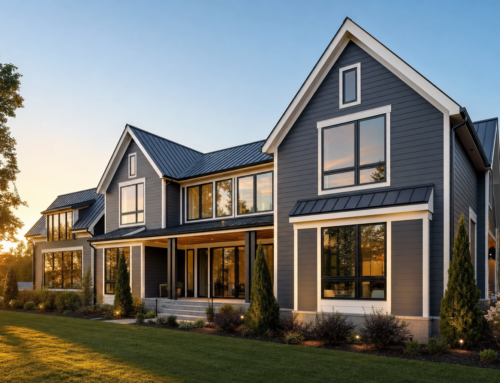
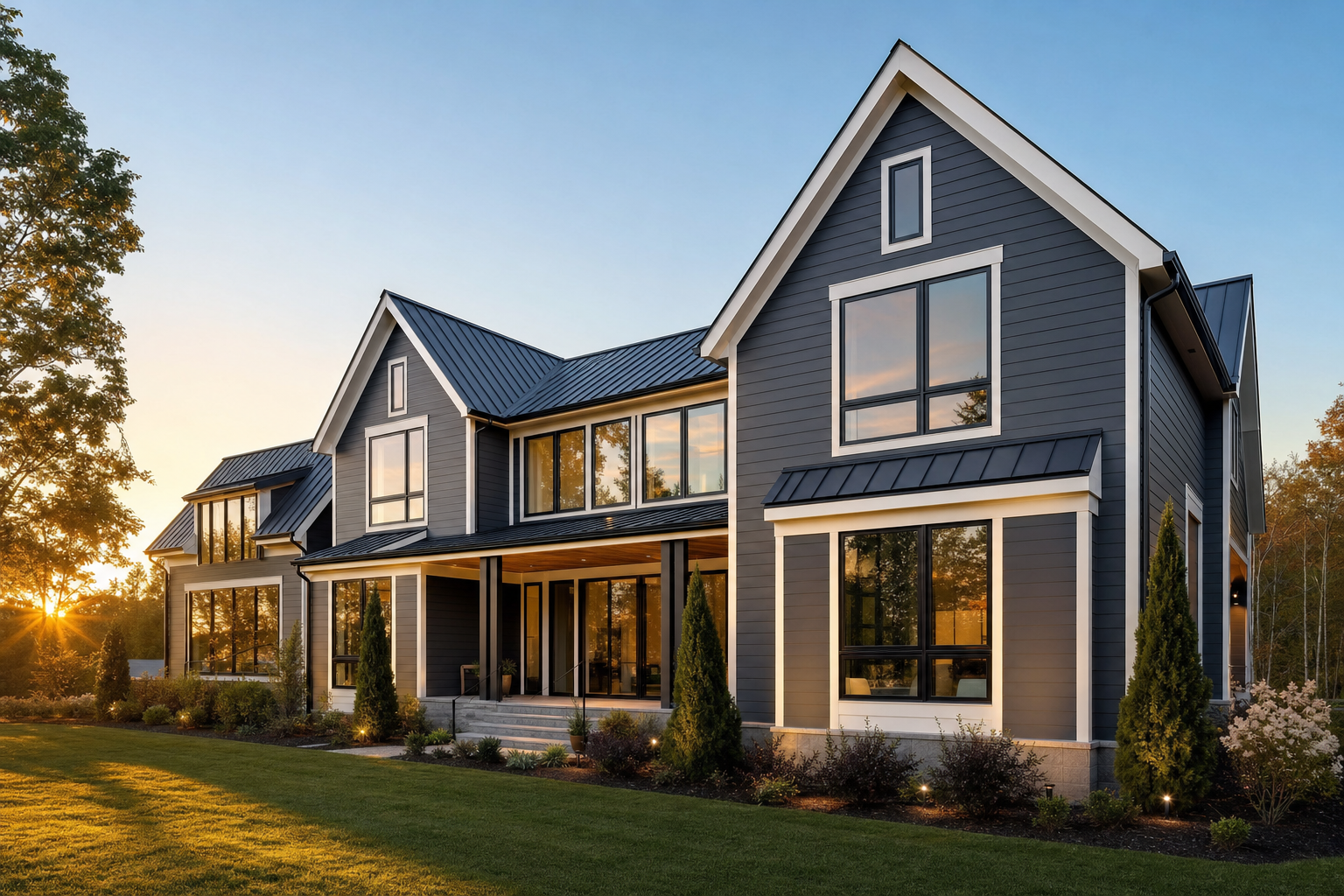
This is the Iron Gray play most people imagine when they first see the color: the classic modern-farmhouse composition. Iron Gray siding panels cover the walls, field, and gable ends. Hardie® Trim boards in Arctic White run the corners, windows, fascia, rakes, and any board-and-batten accent field. The result is a crisply articulated exterior where every architectural element is legible from the street: the eye traces the window frames, the corner boards, the fascia line, in clean contrast against the deep field.
On a transitional home in Apex, this combination reads equal parts Raleigh suburb and Vermont farmstead. The Willow Oaks lining Cary’s older streets and the loblolly pines towering over Holly Springs lots provide just enough organic break-up that the contrast reads as bold rather than stark. For the homeowner who has spent two years on Houzz boards and wants an exterior that earns a second look from the street, this is the move.
The Monochrome Move: Iron Gray Everywhere
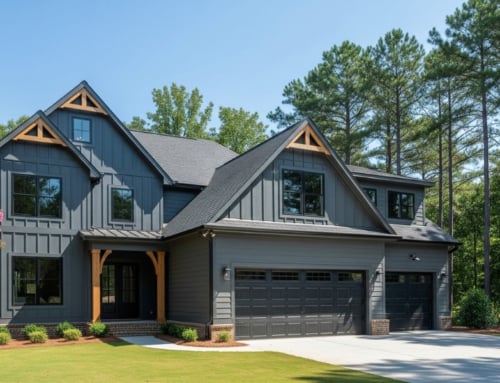
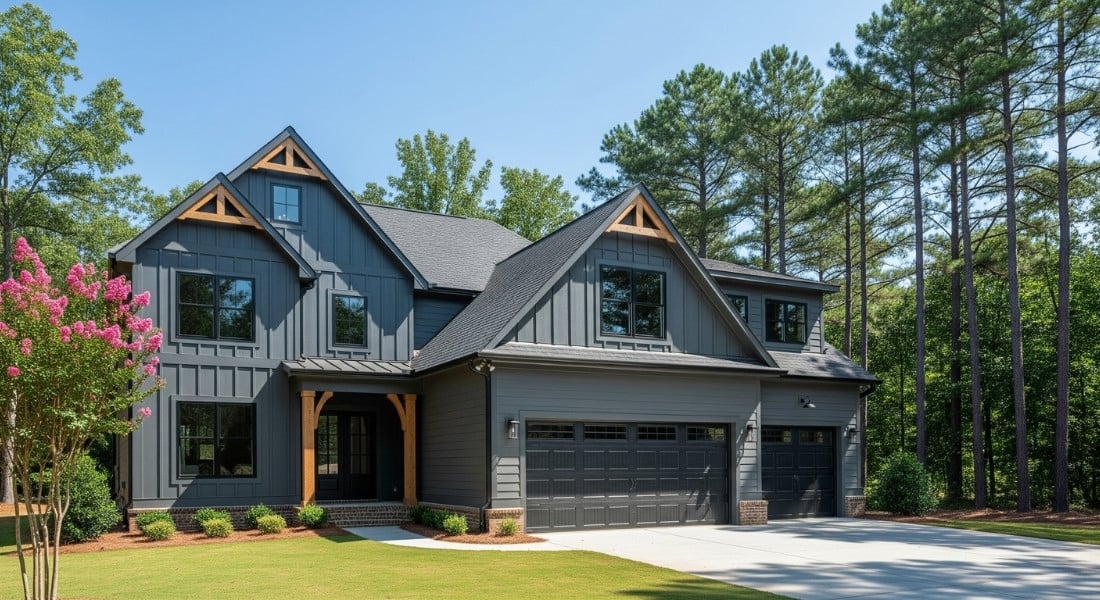
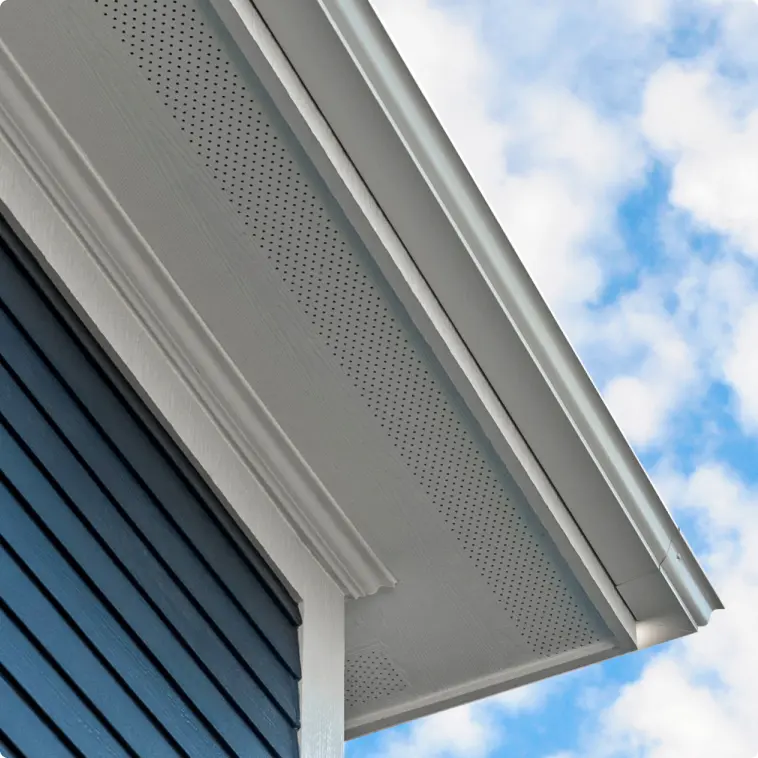
The second play is quieter and more architectural. Iron Gray siding, Iron Gray trim, Iron Gray soffit: a single tonal envelope that turns the house into a unified mass and lets its silhouette do the talking. The effect is the difference between a painting with a frame and a sculpture. Shadows and form replace color contrast as the primary visual language.
This approach works best on homes with strong three-dimensional geometry: a contemporary with cantilevered volumes, a renovated mid-century with a dramatic roofline, or a new build with significant material variety at the entry (brick, board-and-batten, metal panel). On those homes, the monochrome envelope functions as a backdrop that makes the architectural moves pop without competing against painted trim.
It is also, frankly, the harder sell to a Triangle homeowner. Not because it’s wrong, but because it requires trusting the geometry before you see it finished. Hardie’s visualization tool, the Hardie™ Designer powered by Hover®, exists precisely for this reason: upload a single photograph of your home and preview both plays before committing to either.
Both Plays, Built in the Field
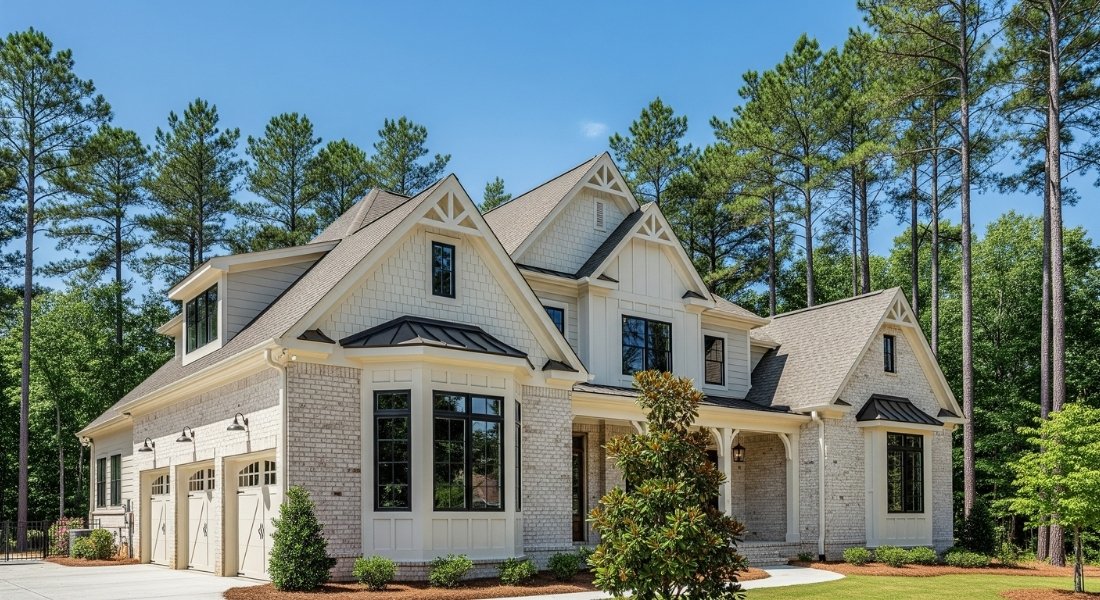
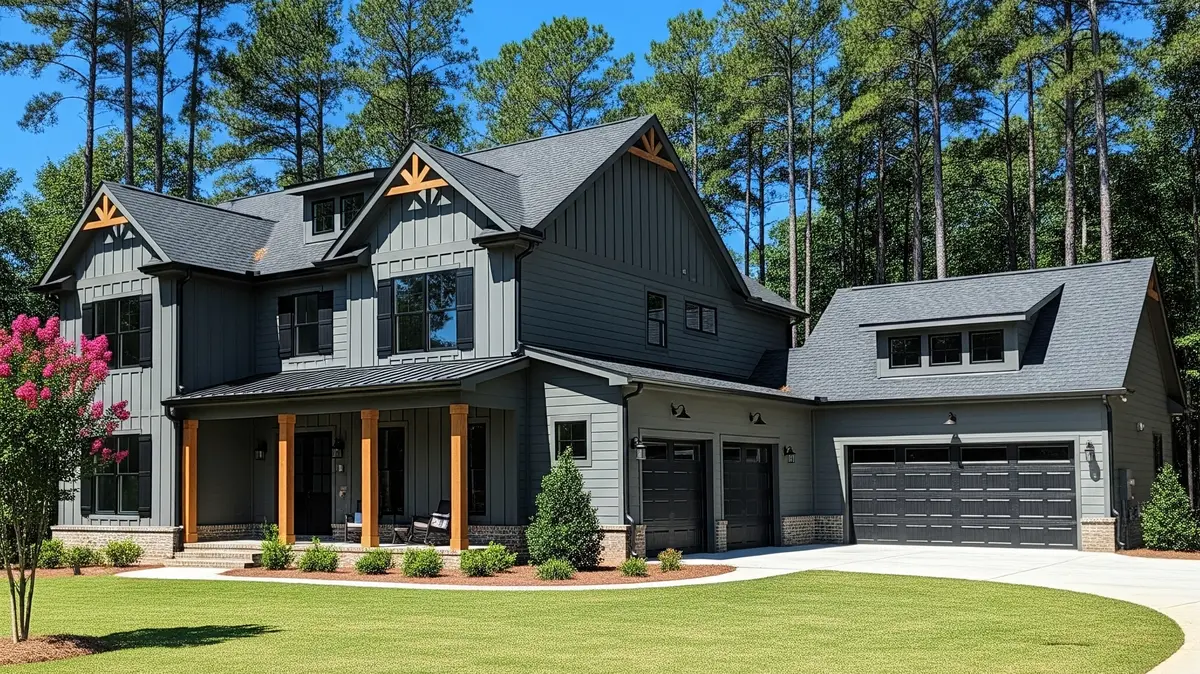
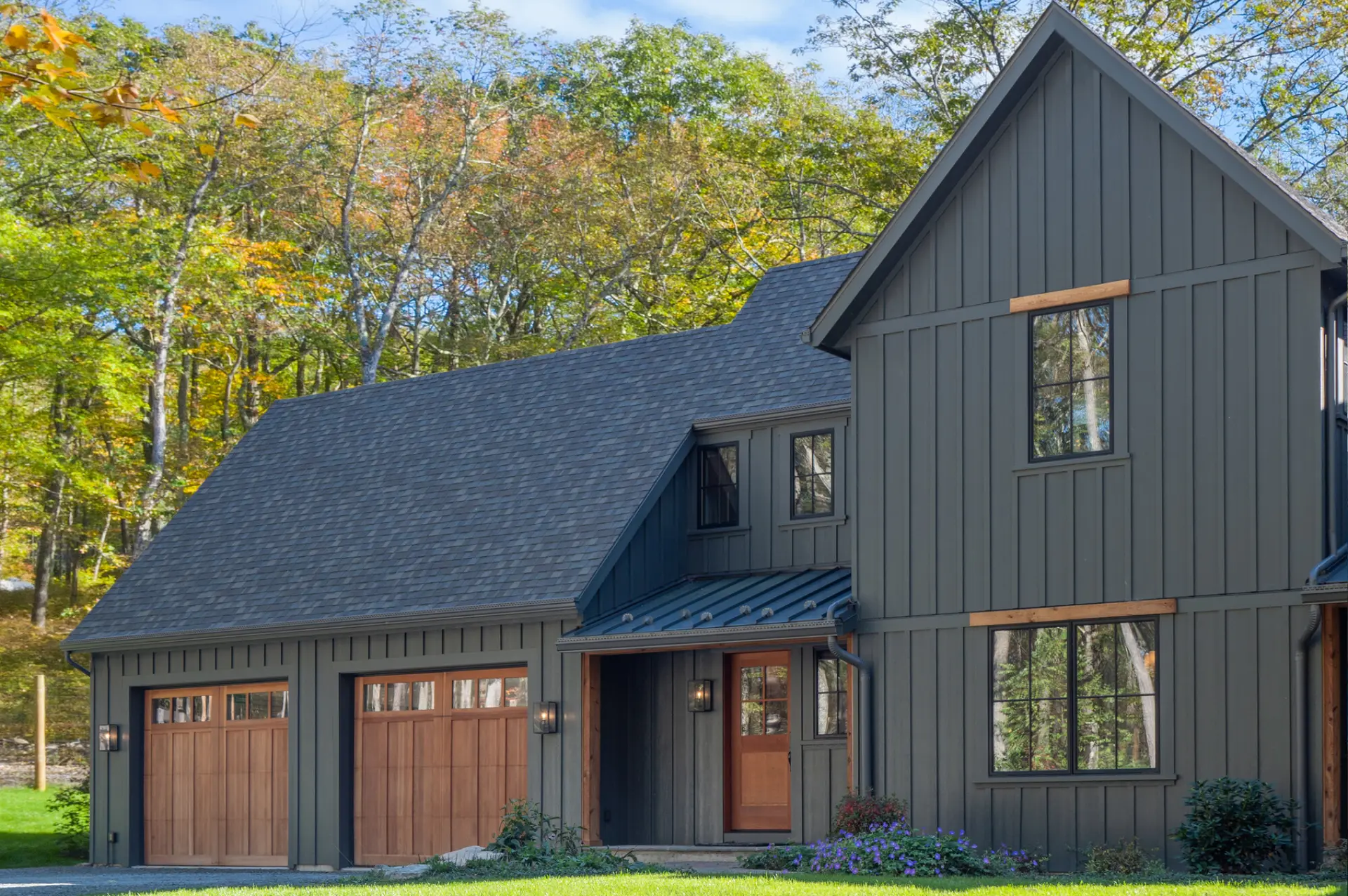
Left: contrast play on a modern farmhouse with white trim. Center and right: two variations of the monochrome envelope, where the geometry becomes the focal point.
What Makes Iron Gray a Fiber Cement Color, Not a Paint Color
The distinction matters more than most homeowners realize. Iron Gray on a James Hardie panel is not a field-applied coat over a substrate. It is a factory-applied ColorPlus® Technology finish: baked on under controlled conditions, not brushed on by a crew in variable weather. The difference shows up in durability, consistency, and the warranty behind it.
The Technical Spec Table
| Feature | Specification |
|---|---|
| Product Line | Statement Collection® (19 curated colors) |
| Finish Technology | ColorPlus® Technology (factory-applied) |
| ColorPlus® Finish Warranty | 15 years; covers paint, labor, peeling, cracking, chipping |
| Substrate Warranty | 30 years (non-prorated limited warranty) |
| Combined Protection Horizon | 30 years on the board, 15 on the finish |
| Fire Rating | Non-combustible / Class A (ASTM E84) |
| Climate Engineering | Engineered for Climate® (Southeast: hot/humid summers, storm exposure) |
| Pest & UV Resistance | Engineered resistance to insect damage and UV fading |
| Maintenance Profile | Low. Periodic rinse, no repainting within warranty period |
The Class A fire rating matters for the Triangle as insurance carriers pay closer attention to exterior cladding classes. The Engineered for Climate® designation means the product formulation was tested against the Southern climate zone’s specific stressors: long humid summers that accelerate wood rot, the thermal cycling of Triangle winters that cracks lower-quality substrates, and Atlantic-season storm exposure. This is not a color story layered over a commodity product. It’s a climate-performance story that happens to have exceptional design credentials.
What a James Hardie Preferred Contractor Status Actually Means for Your Project
There are James Hardie installers, and then there are James Hardie Preferred Contractors. Odyssey Contracting holds Preferred Contractor status. For a homeowner committing to a whole-home re-siding project, that distinction is worth understanding before anyone bids.
Preferred status requires verified training in Hardie’s proprietary installation methods: correct fastener patterns, required clearances from grade and roofline, flashing and moisture-barrier sequencing. These are not decorative requirements. An installation that violates Hardie’s specifications can void both the finish and substrate warranties, regardless of how good the siding itself is. When Odyssey installs your Iron Gray HardiePlank®, the 15-year finish warranty and 30-year substrate warranty remain intact. That is what Preferred Contractor status protects: not Odyssey’s reputation, but your warranty.
With over 10,000 projects completed across the Triangle and a 4.9-star rating from 280+ Google reviews, Odyssey has the track record to back it. If you’re evaluating contractors for an Iron Gray project in Cary, Apex, Holly Springs, Raleigh, Durham, Chapel Hill, or Greensboro, verify Preferred status before signing.
Triangle Architecture That Wears Iron Gray Well
Not every home is a natural fit for every color. Here is an honest read of the Triangle’s dominant housing stock against Iron Gray:
Modern farmhouse and transitional new builds (2015 to present): These homes were designed for exactly this color. Clean lines, board-and-batten accents, dark rooflines, black window frames: Iron Gray ties every element together. Highest-confidence play in the Triangle.
Mid-century ranches (1955 to 1975): The low profile and deep eaves give Iron Gray room to look purposeful rather than heavy. The monochrome approach with a warm-accent front door (Terracotta or aged brass) lands as contemporary without erasing original character.
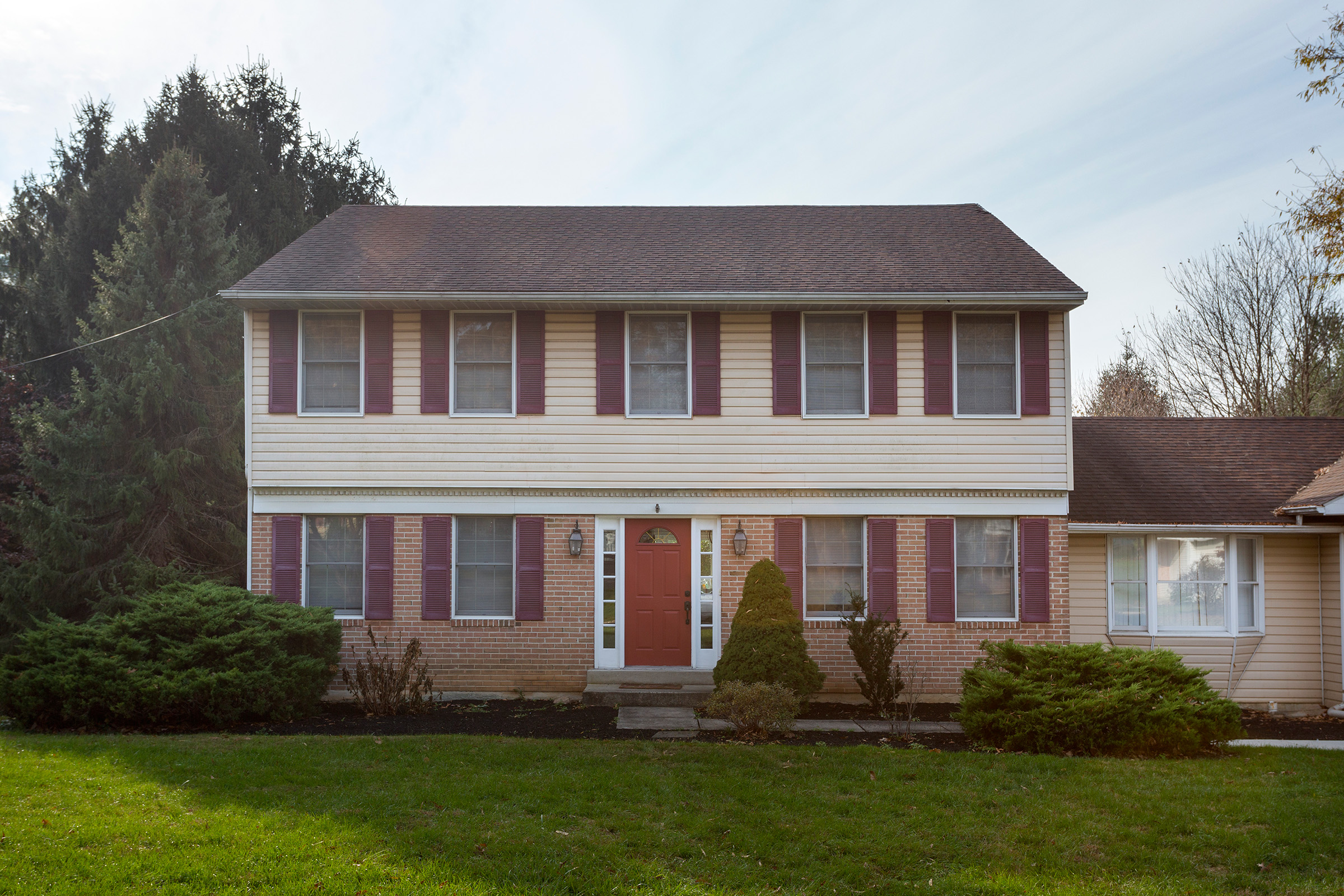
1990s and 2000s spec homes (the Triangle’s dominant housing type): Biggest transformation potential. The steeply-pitched colonials and transitionals that define Cary and Apex were built for builder-grade beige: products now failing in the ways fiber cement doesn’t. An Iron Gray re-skin repositions these homes architecturally, bringing them in line with what new construction delivers at two to three times the original cost basis.
Brick-and-siding blends: Proceed with care. Iron Gray against warm red brick works; against cool buff brick, the combination can flatten. The Hardie™ Designer visualization tool exists precisely for this scenario. See it on your home before committing.
What an Iron Gray Re-Skin Actually Does
Same colonial, same lot, same roofline. The siding decision is the entire transformation.

The Triangle’s Iron Gray Specialist Is Ready When You Are
You’ve done the research. You know the color, you understand the two plays, and you know what a Preferred Contractor warranty means. The next step is a conversation about your specific home, your roofline, your trim, and your timeline. It costs nothing to have it.
The Larger Envelope: How Siding Connects to the Rest
Iron Gray siding is the most visible decision in an exterior renovation, but it doesn’t exist in isolation. The envelope performs as a system: cladding, trim, roofing, flashing. Odyssey’s scope covers all of it, from fiber cement siding to roofing to the trim details where the system either holds together or doesn’t. See our remodeling services for the full picture.
Browse our featured projects for examples of how Triangle homeowners have combined exterior cladding, roofing, and window decisions into coherent architectural statements.
Already Read the Short Version? Here’s What This Chapter Adds
Our earlier quick-read post, “James Hardie Siding, Color of the Year 2026”, gives you the essential facts in five minutes: the color, the technology, the cost range in Raleigh. This chapter is the deeper cut: the two design plays in architectural detail, the full warranty story, what Preferred Contractor status protects, and the Triangle-specific context. Both pieces live together: the quick read for the homeowner who wants the highlights, this chapter for the one who wants to arrive at the conversation prepared.
Explore our full James Hardie siding services in Raleigh and our siding overview for more on the complete product range Odyssey installs.
Next: The Shield.
The envelope only performs as well as the roof above it. Chapter 03 turns to Brava synthetic roofing.
Let’s wrap your home’s next chapter.
From a single-elevation re-skin to a whole-home Iron Gray transformation, start with a no-pressure conversation about what’s possible.