Why Black-Framed Windows Define 2026
The window is no longer just an opening. It’s the organizing principle of a room, a frame around the world outside, and the single decision that separates a house from an architectural statement.
There’s a moment in every well-executed renovation when the rest of the project clicks into focus. For nearly every high-design home we’ve walked into in Cary, Apex, and Holly Springs over the past few years, that moment is anchored by the same thing: black frames. Not as a finishing touch. Not as a trend borrowed from an Instagram feed. As a foundational decision made early, one that shaped every other choice that followed.
This is Chapter 01 of the Ultimate Home Makeover, 2026 Edition. We’re starting here because windows are the soul of a home’s architecture. Get them right, and the rest of the composition writes itself.
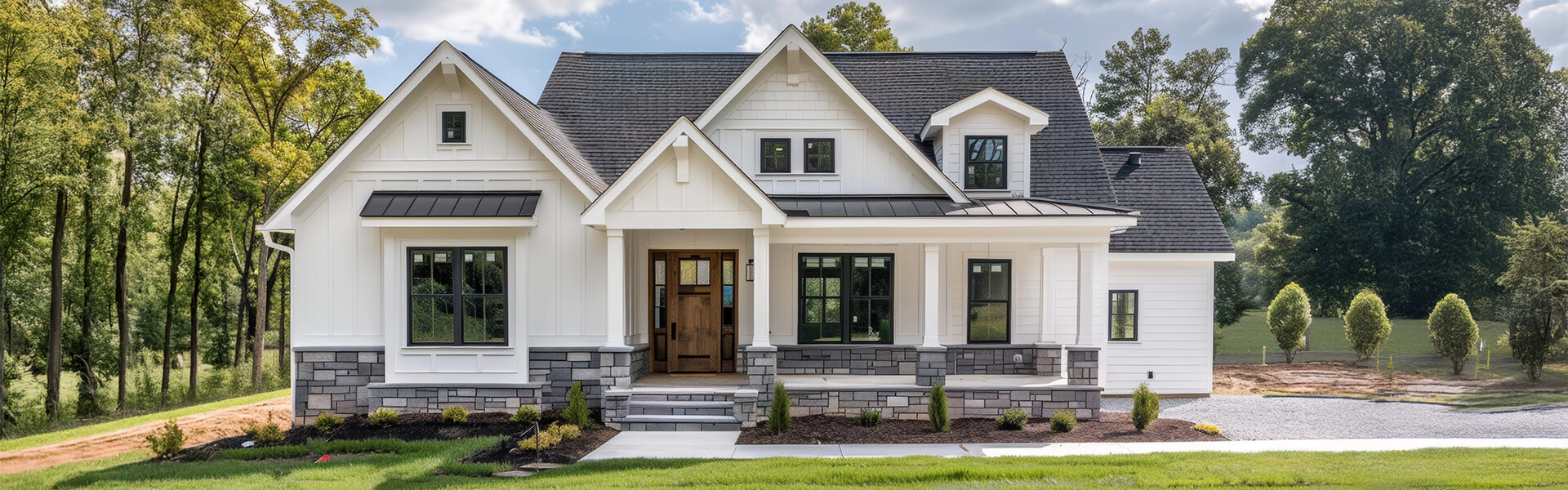
The Hundred-Year Backstory Behind a “New” Trend
One of the most common questions we hear during initial design conversations sounds like skepticism: “Are black windows just a trend? Are they going to feel dated in ten years?”
It’s a fair question. Replacing windows is a long-term investment, and homeowners are right to scrutinize anything that looks aesthetically loud. But the premise underneath the question is wrong. Black-framed windows aren’t new. Their origin traces back to nineteenth-century European industrial buildings and early twentieth-century American factories and warehouses, where steel frames painted black were the default for a century before they were ever a design choice.
That history matters because it changes the category. Black frames don’t sit on the same shelf as chevron tile, barn doors, or Tuscan-yellow kitchens. They sit on the shelf with white kitchens, brushed nickel hardware, and Carrara marble: foundational design decisions that anchor a home regardless of how interior decor trends move around them.
When we tell clients that black-framed windows are “the new neutral,” that’s the argument underneath. Not that they’re trendy. That they’ve already proven they outlast trends.
The Picture Frame Effect: A Design Principle Worth Understanding
The most useful mental model for black-framed windows isn’t aesthetic, it’s curatorial. Think of a gallery wall. The frames aren’t the art. They exist to focus your attention, to draw a sharp boundary between the neutral wall and the image within it, to make the subject matter intentional.
Black window frames operate on exactly the same principle. A white or beige frame dissolves into the wall around it. A black frame declares itself, and in doing so, it directs your eye outward, into the landscape or garden or streetscape beyond the glass. Interior designers call this the Picture Frame Effect: the window becomes a hanging artwork in your living room, except the subject changes with the season and the hour.
For Triangle homeowners adding a sunroom, expanding a master suite, or opening a living room to a full window-wall design, this effect transforms how a room feels at a fundamental level. The view isn’t incidental. It’s the point. And in North Carolina, where the view often involves mature hardwoods, pine canopy, or a well-tended back garden, the curatorial frame earns its keep on day one.
What This Looks Like Across the Triangle
The strongest argument for black frames in our market isn’t theoretical. It’s the visual evidence on the ground. The Triangle’s housing stock is wide enough that black frames have proven themselves across nearly every meaningful architectural category we work in.
In Raleigh, drive any North Hills, Five Points, or ITB neighborhood and the renovation pattern is consistent: 1960s and 1970s brick ranches and mid-century homes are getting black-frame window upgrades that recast the entire front elevation. The frames don’t fight the brick, they sharpen it.
In historic Oakwood, the same finish reads completely differently. On a restored bungalow or Queen Anne, slim-profile black frames provide period-appropriate contrast without imposing modernism on a home that doesn’t want it. The look is closer to a steel-sash window from the original era than to anything contemporary.
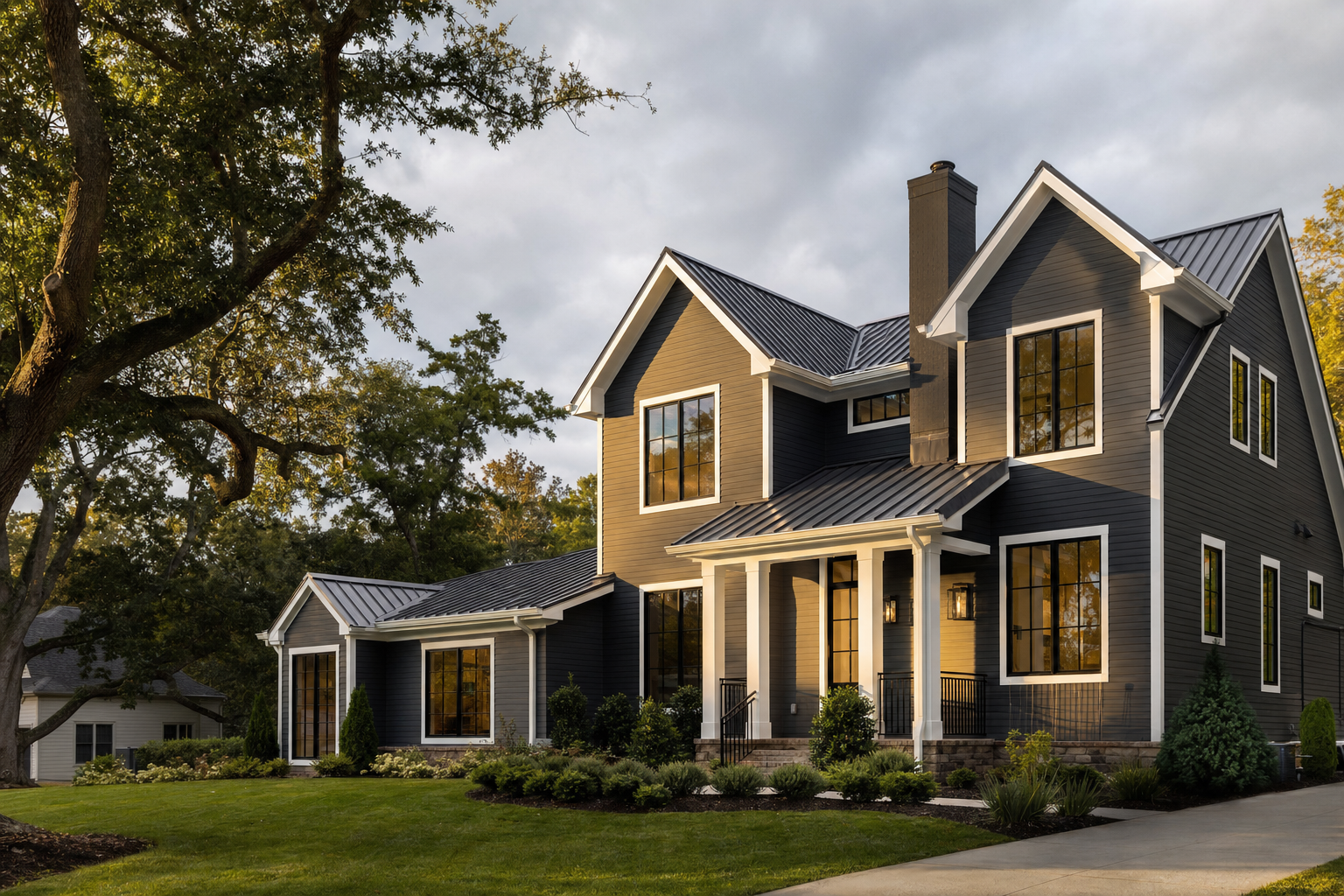
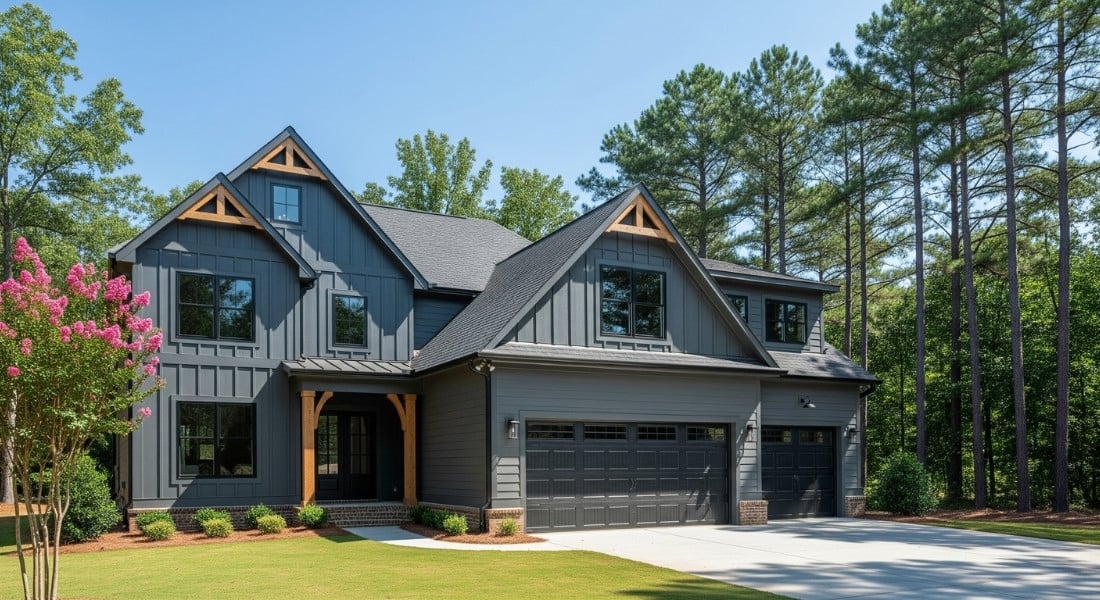
In Cary and Apex, where the new-build aesthetic skews modern farmhouse and modern traditional, black frames have crossed completely into the default category. A new-construction farmhouse without black frames now reads as a compromised version of itself. The same is increasingly true across Holly Springs as the inventory there matures.
And in Durham and Chapel Hill, where infill construction sits alongside mid-century stock and where the design vocabulary has always trended a touch more architecturally adventurous than Wake County, black frames anchor the contemporary moment without making older homes feel like they’re trying too hard.
The pattern across all of these markets, including our work in Greensboro, is the same: black frames don’t impose a style. They sharpen whatever style is already there.
Black Frames in the Wild


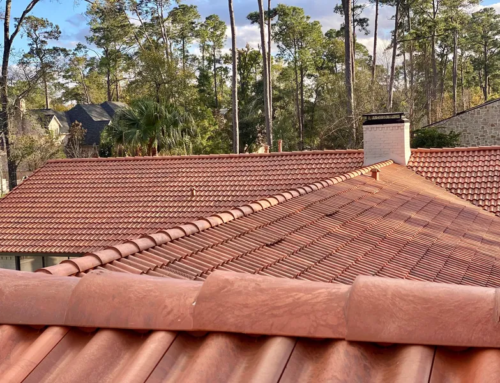
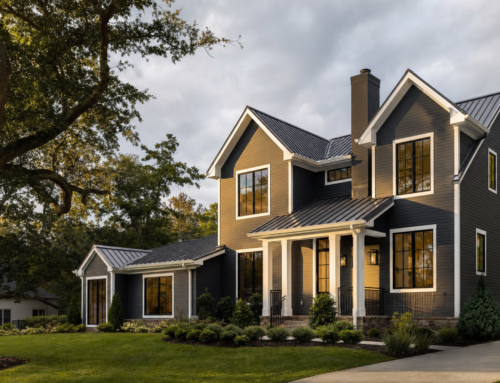
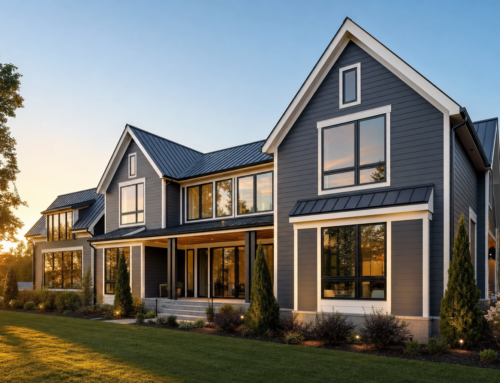
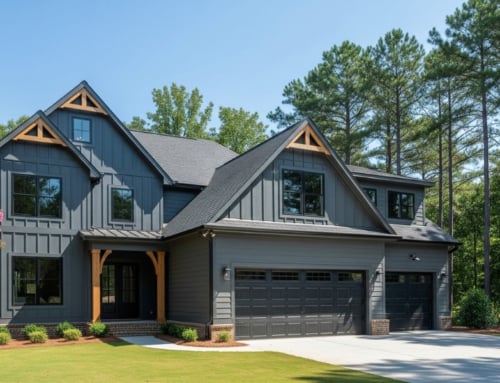
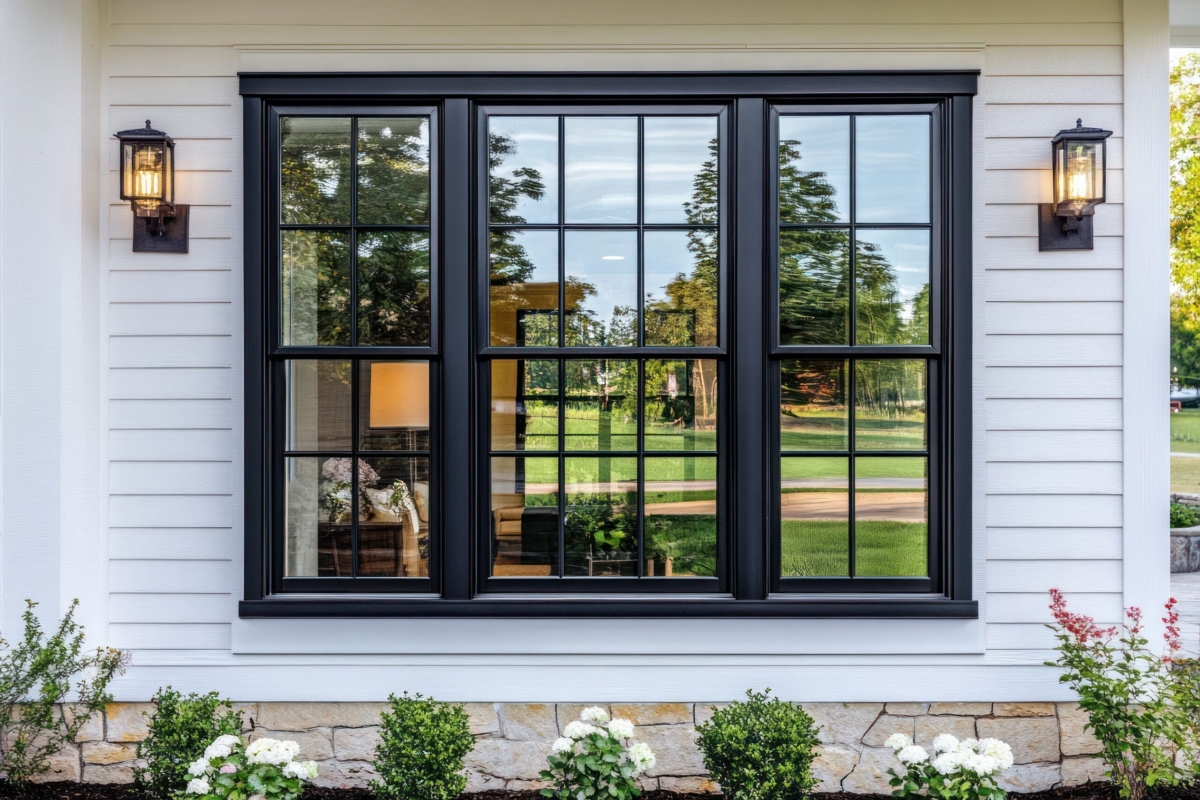
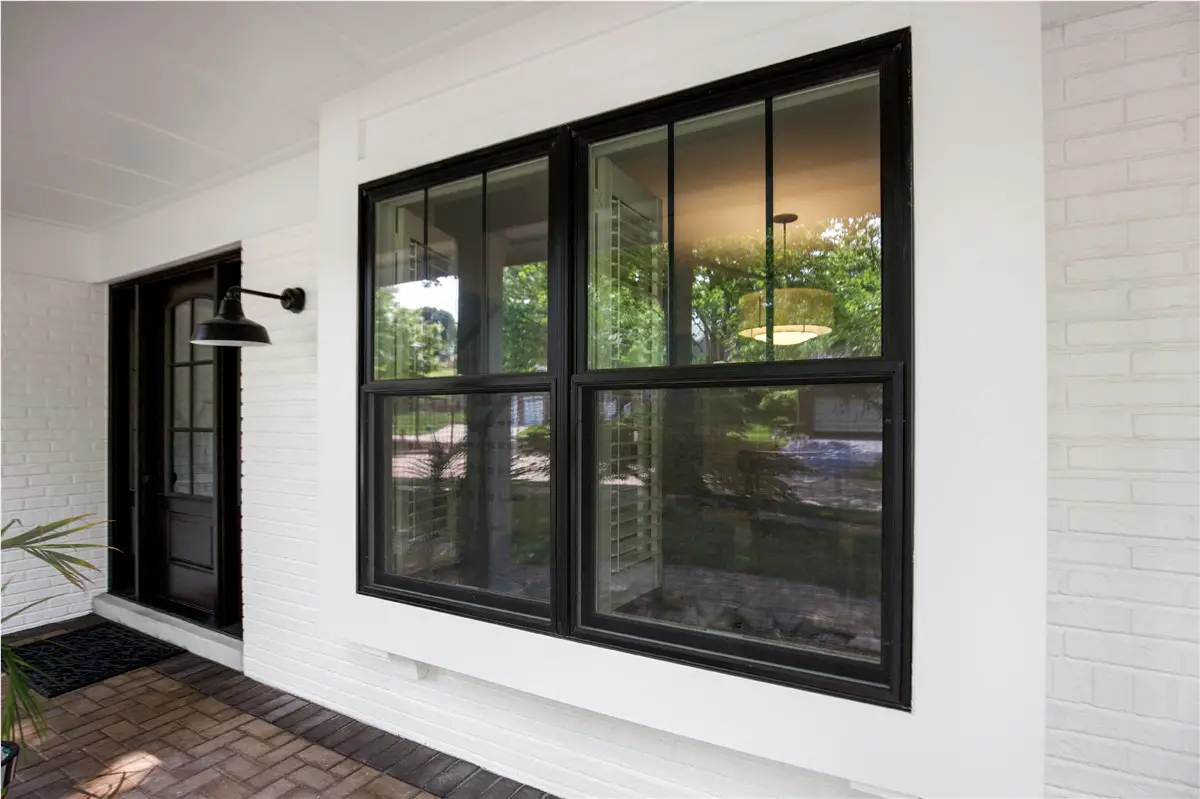
Three applications, one design language: a covered outdoor living room, a rear elevation built around the view, and an interior nook where the frame turns a window into a focal point.
The Architecture of 2026: Slim Profiles and Maximum Glass
Here’s where 2026 separates itself from the black-window moment of five years ago. Early iterations leaned industrial: thick frames, warehouse aesthetics, a deliberate nod to the loft-and-exposed-brick vocabulary. That chapter is closing.
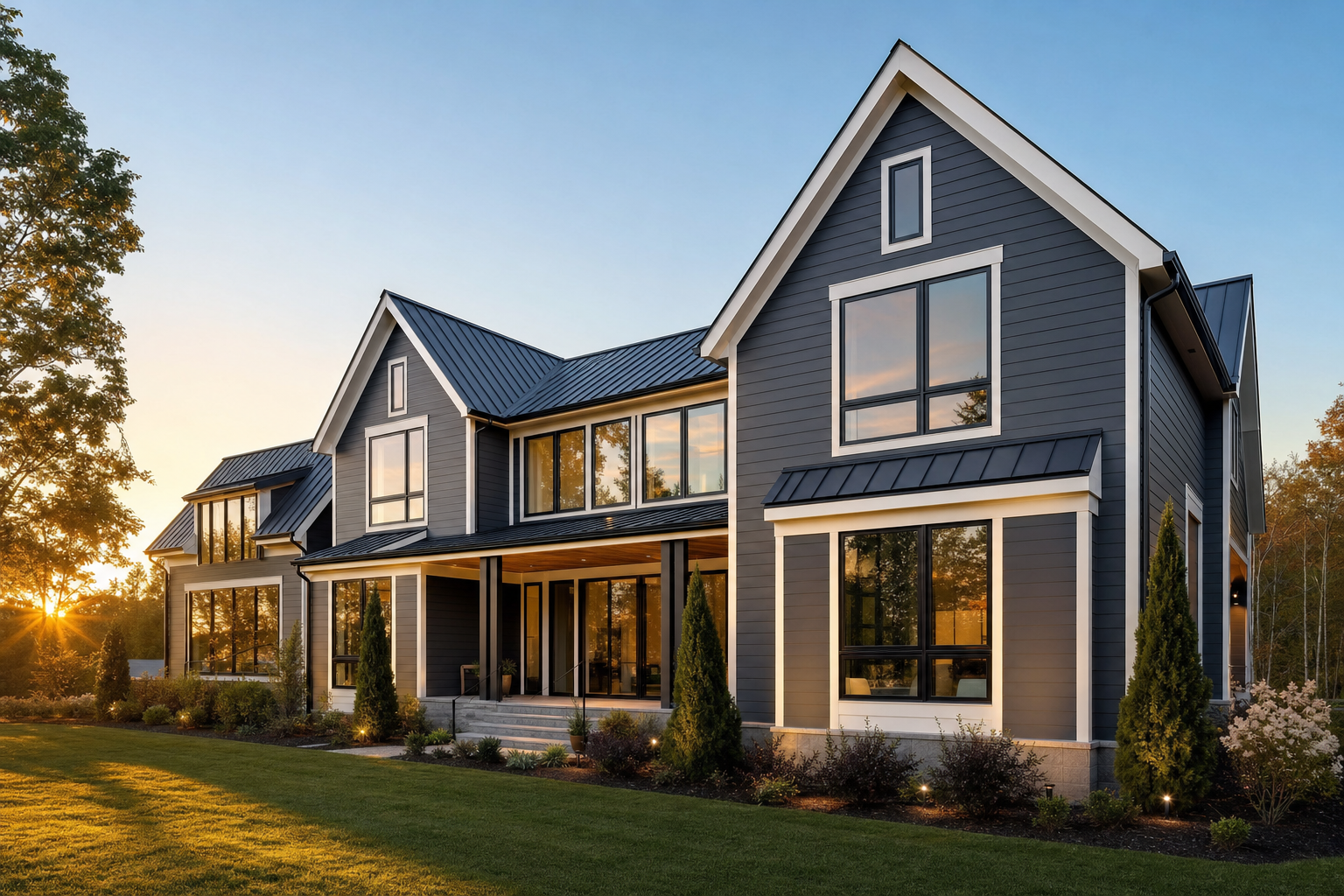
The 2026 evolution is precisely the opposite: frames are getting thinner. Premium aluminum and fiberglass construction allow profiles that would be structurally impossible in vinyl, and the result is windows where the glass dominates. The frame is still present, still black, still doing its curatorial work, but it’s doing it from the margins, with less visual mass.
This matters for the Triangle aesthetic in particular. The dominant residential style here (modern farmhouse, modern traditional, transitional) has never been pure industrial. It’s warmer than that, more layered, more livable. Ultra-slim black aluminum, fiberglass, and composite frames speak to that sensibility fluently. They bring the architectural crispness of contemporary design without imposing the austerity.
What to Spec, and Why
If history and curatorial principle make the case for black frames, materials and construction make the case for which black frames to actually install. A few specifications are worth understanding before you sit down with any contractor:
Frame material: aluminum, fiberglass, or composite
These three material families handle Triangle heat, humidity, and direct sun without the warping, expansion, or fading risk that vinyl carries at darker colors. They also allow the slim sightlines defining 2026 design. Avoid vinyl in dark finishes, even when the price point is tempting.
Thermally broken construction
A thermal break is an insulating barrier inside the frame that stops heat transfer between the exterior and interior. Critical for energy performance, and non-negotiable for aluminum frames specifically, because aluminum without a thermal break is a heat conductor.
Slim sightline profile
The “soul” of the 2026 look is glass area, not frame area. Specify the thinnest sightline profile the manufacturer offers in the line you’re choosing. This is where premium and value tiers separate visibly.
Long-warranty finish
The black exterior finish is the most-scrutinized surface on the window. Look for factory-applied finishes with at least a twenty-year color and adhesion warranty. Field-painted frames are not a substitute, regardless of price.
Lifespan expectations
Aluminum and fiberglass black-frame systems are engineered for thirty- to fifty-year service lives when properly installed and maintained. That horizon changes the financial math: this is a once-in-the-home decision, not a ten-year upgrade.
Dual-color frames (a Triangle-specific solution)
Modern manufacturers offer dual-finish frames: black on the exterior, white or natural wood on the interior. For homeowners who love the curb-appeal silhouette but worry about heavy black mullions clashing with interior design, this is the highest-value option in the catalog. Worth asking about specifically.
The Raleigh Reality Check
Every renovation conversation in our market eventually arrives at the same three concerns. They’re worth surfacing directly.
Concern 1: Will They Survive Our Summers?
Dark colors absorb heat. North Carolina summers run hot and humid for months, and cheap dark-finish frames can expand, warp, or fade under direct sun. The answer isn’t to avoid black frames, it’s to avoid cheap materials in any color. Premium aluminum, fiberglass, and composite frames handle our climate without breaking a sweat. We have not seen a properly specified system fail prematurely on a Triangle home.
Concern 2: Are They Becoming the New “Builder Default”?
This is a real and underrated risk. Black frames have become so popular that some volume builders now spec them on every project, regardless of whether the home’s architecture supports the choice. The result can read as generic. The fix is specification, not avoidance: choose ultra-slim sightlines, choose better materials, and consider deep bronze or matte charcoal as alternatives to pure black where the home’s palette wants warmth instead of contrast. A thoughtfully chosen black frame still reads as custom. A thoughtless one reads as builder-grade.
Concern 3: What If I Love the Look Outside but Not Inside?
This is where dual-color frames solve a problem most homeowners don’t realize is solvable. You can specify black on the exterior of the home and a white, natural wood, or even painted-to-match interior finish. Both finishes are factory-applied and warrantied. The curb appeal stays dramatic. The interior styling stays open. We recommend dual-color frames for nearly every homeowner who hesitates at the interior commitment.
“A thoughtfully chosen black frame still reads as custom. A thoughtless one reads as builder-grade. The difference isn’t the color. It’s the specification behind it.”
Odyssey Contracting design notes · UHM 2026
Where Black Frames Perform Best: Project Applications
Not every window in a home needs to be black-framed to transform the architecture. In practice, the highest-impact applications are concentrated in specific project types, and they happen to align precisely with the renovations Odyssey executes most often.
Sunroom and Four-Season Additions
A sunroom lives or dies by its relationship to natural light. Black frames maximize the visual drama of that light. They create a strong perimeter that makes the glass feel intentional rather than structural, and they unify the addition’s connection to the main house’s architectural language. Our sunroom addition work consistently shows that the window specification is the first aesthetic decision clients make, and the one they reference most in project reviews.
Master Suite Expansions
The master suite is where the Picture Frame Effect matters most personally. A window seat or large operable unit framed in black, positioned to capture a garden view or morning light, elevates the room from comfortable to considered. For additions in Cary and Apex neighborhoods where the lot provides genuine views, this is a non-negotiable conversation.
Full Window-Wall Living Rooms and Great Rooms
Perhaps the most dramatic application: a full glass wall opening a great room to a covered outdoor living space. Slim-profile black frames hold this composition together. They provide just enough visual structure to make the expanse of glass feel designed rather than exposed. Without the frame definition, large glass installations can feel unfinished. With them, the room gains a quality borrowed from the best residential architecture in the country.
For a closer look at completed projects of this scale, our featured projects gallery shows how these decisions translate in real Triangle homes.
The Styles That Black Frames Belong To
Black frames aren’t universal in the way white frames once were, but their range is wider than most homeowners realize.
The styles they serve best:
- Modern Farmhouse: the dominant new-build and renovation aesthetic in Wake County; black frames are practically definitional at this point.
- Modern Traditional: where the frame’s crispness provides counterpoint to the home’s more ornate historical details.
- Transitional: the broadest category, and the most forgiving; black frames bring forward-looking confidence to a style that can otherwise hedge too much.
- Mid-Century Modern and Ranch: particularly strong on the brick mid-centuries common across Raleigh’s ITB neighborhoods, where black frames give a fifty-year-old home a clear forward-looking identity.
- Industrial and Minimalist: the original habitat, still well-served, especially in urban Raleigh and Durham environments.
What they don’t suit as naturally: highly ornate Victorian or Colonial Revival homes where the frame reads as a period anachronism. But for the Triangle’s housing stock, with its strong representation across modern farmhouse, transitional, and mid-century styles, black frames are close to universally applicable.
Ready to See What Black Frames Would Do for Your Home?
Our team has guided hundreds of Triangle homeowners through window replacement and addition projects that start with exactly this conversation. We’ll look at your home’s architecture, your renovation scope, and the views worth framing, and give you a clear picture of what’s possible.
What to Look for in a Window Contractor
A window specification is only as good as the installation behind it. A few things worth asking any contractor you’re evaluating:
Material expertise. The shift to slim-profile aluminum, fiberglass, and composite requires different handling than vinyl. Confirm your contractor has direct experience across all three families.
Project integration. For major renovations (additions, sunrooms, full remodels) the window specification needs to be coordinated with framing, insulation, and interior finish decisions from the beginning, not bolted on at the end. Contractors who operate across all trades on a single project manage this integration naturally.
Portfolio depth. Ask to see completed projects that include the frame style and application type you’re considering. The difference between a well-installed and a poorly-installed black-frame window wall is visible from across the street.
Odyssey Contracting has completed more than 10,000 projects across Raleigh, Cary, Apex, Holly Springs, Durham, Chapel Hill, and Greensboro. With 4.9 stars across 280+ Google reviews, our work across additions, sunrooms, and full home remodeling reflects a consistent commitment to craftsmanship that carries through to every specification decision, including our replacement window services.
Next: The Envelope.
Black frames give a home its soul. The next decision gives it its skin.
Let’s frame your home’s next chapter.
Whether it’s a window-wall sunroom, a master suite expansion, or a whole-home window replacement, start with a no-pressure conversation.